
Bridging the Gap: Why Learning Our History Powers Our Vote
By Tomas Socias
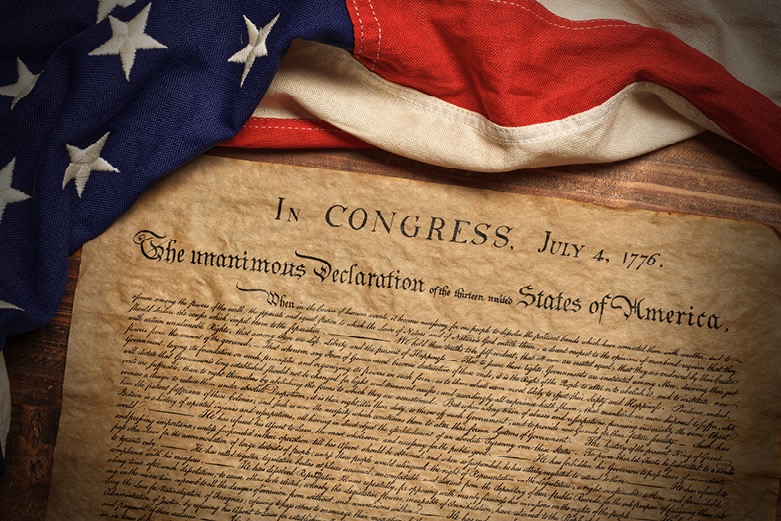
The Declaration of Independence famously proclaims that "all men are created equal" and "are endowed by their Creator with certain unalienable rights," including "life, liberty, and the pursuit of happiness." It also proposes that the primary purpose of government is to secure these rights. To what extent do you think the U.S. has lived up to these claims over the course of its history?
The United States is recognized as a strong promoter of Life, Liberty, and the Pursuit of Happiness. These values have been consistently promoted in its founding documents, including The Declaration of Independence. However, despite the government's intent to create equal opportunities for all, over the course of history, it has also played a significant role in enabling inequalities. From abolishing slavery to advancing women's rights, most positive milestones come with a dark past.
In the book The Color of Law, author Richard Rothstein highlights that government-led lending policies accentuated racial segregation and disproportionately benefited white people. They were able to secure preferential loans in neighborhoods offering a high quality of life and strong property value appreciation. Conversely, minorities were subject to redlining practices and predatory lending. This is an example of how people were not treated equally. It shows that even when citizens were free, it was not true freedom, as minorities were not able to choose where to live.
The U.S. has made significant progress in correcting inequality. The Supreme Court case of Brown vs Board of Education is an example of a ruling that ended segregation in public schools. Today, the government also recognizes 7 protected classes, and many states recognize additional minorities as protected. I believe this progress is due to the country's foundational values, as well as the concept of checks and balances. The government's structure limits the power of a person or entity, therefore reducing the risk of abuse of authority.
In conclusion, the U.S. has advocated since its early days that all citizens are equal. However, during the course of history, it has both upheld and contradicted this mandate. Significant progress through rulings and laws has been made. However, there is still a lot of work ahead of us to fully embrace these ideals.
How to Take Action & Shape the Future
Progress isn't automatic—it happens when citizens learn about history and participate in choosing leaders who write fair policies. If you want to help move these ideals forward:
Verify Your Voter Status: Confirm your registration or update your details online at USA.gov Voter Registration, or check local details via Vote.org.
Research Local Ballots: Review nonpartisan election guides on VOTE411.
Check State Election Guidelines: Find official state and local election office contacts through the U.S. Election Assistance Commission.
Sources & Further Reading
Foundational Documents:
National Archives. (1776). The Declaration of Independence: A Transcription. Available at Archives.gov
Historical & Policy References:
Rothstein, R. (2017). The Color of Law: A Forgotten History of How Our Government Segregated America. Liveright Publishing. Research summary available at Economic Policy Institute
Legal Landmarks & Civil Rights:
Supreme Court of the United States. (1954). Brown v. Board of Education of Topeka, 347 U.S. 483. Case text available at Oyez.org
U.S. Equal Employment Opportunity Commission (EEOC). Federal Laws Prohibiting Job Discrimination: Questions And Answers. Overview available at EEOC.gov